Commonly referred to as the “central dogma” of biology, genetic information within a cell follows a path where DNA is transcribed into RNA, then RNA is translated into proteins.
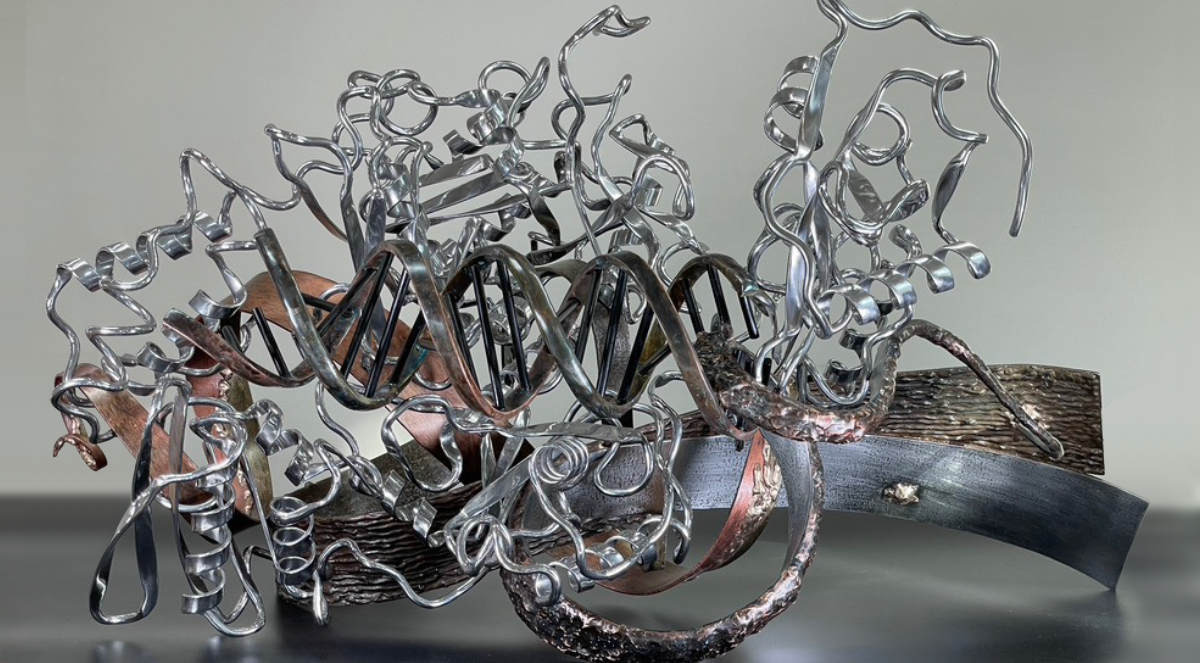
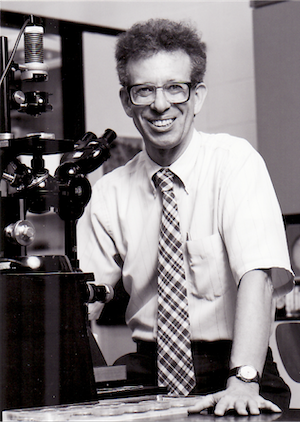
Once thought to be an irreversible, unidirectional process, virologist Howard Temin countered that idea through his revolutionary discovery of reverse transcriptase — an enzyme that converts RNA into DNA. This opened the door to a whole new world of scientific discovery and earned Temin the 1975 Nobel Prize in Physiology or Medicine.
Today, Temin’s legacy shines brightly at the University of Wisconsin–Madison and its McArdle Laboratory for Cancer Research, his professional home for three decades.
On Sep. 12, 2025 the scientific community celebrated the 50th Anniversary Temin Nobel Prize Symposium hosted by the McArdle Laboratory at the UW–Madison School of Medicine and Public Health in partnership with the UW Carbone Cancer Center and the Morgridge Institute for Research.
Recordings of the entire, daylong event are available here.
“The symposium was a tremendous success, gathering people from across campus and well beyond for an amazing day of science and reflection,” says McArdle director Paul Lambert. “I thank the organizing committee, chaired by Paul Ahlquist, and also Morgridge Institute CEO Brad Schwartz and SMPH for contributing many resources to support the symposium.”
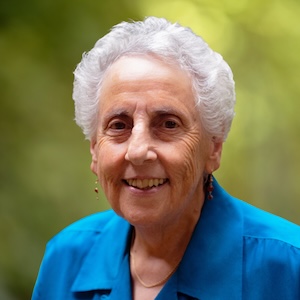
A major highlight of the event was keynote speaker Rayla Greenberg Temin, Howard’s wife and emerita professor of genetics at UW–Madison. She offered remarkable insights about Temin’s life and career.
Temin’s early work centered on the first cancer-causing virus discovered, Rous sarcoma virus — an RNA virus that causes cancer in chickens. His early data led to a groundbreaking insight: although the transmissible viral particles contained RNA, in infected cells this virus formed a DNA “provirus” version of the RNA genetic material.
Now classified as retroviruses, these include the cancer-causing mouse leukemia virus as well as human immunodeficiency virus — all powered by reverse transcriptase.
Despite initially being faced with intense resistance and criticism, Temin’s curiosity-driven passion to follow the science wherever it led and his years-long persistence in devising progressively more informative experiments to test and expand his results produced a widely celebrated milestone achievement.
Temin was also a dedicated professor and mentor, and most of the symposium speakers were his former trainees who have continued his legacy through their own successful careers in molecular biology, virology, and oncology at UW–Madison and beyond.
“Dr. Temin influenced their academic and personal lives by being not just a superb scientist but also an amazing teacher, mentor, colleague and friend,” adds Lambert.
Today, science and medicine continually reap the benefits of this radical, data-driven discovery that stemmed from Temin’s curiosity. The discovery of reverse transcriptase not only transformed understanding of gene transfer, but provided powerful tools and insights into cancer, virology, evolution and many other areas that transformed the scientific possibilities that advance human health.
Click here to view the 50th Anniversary Temin Nobel Prize Symposium speaker recordings