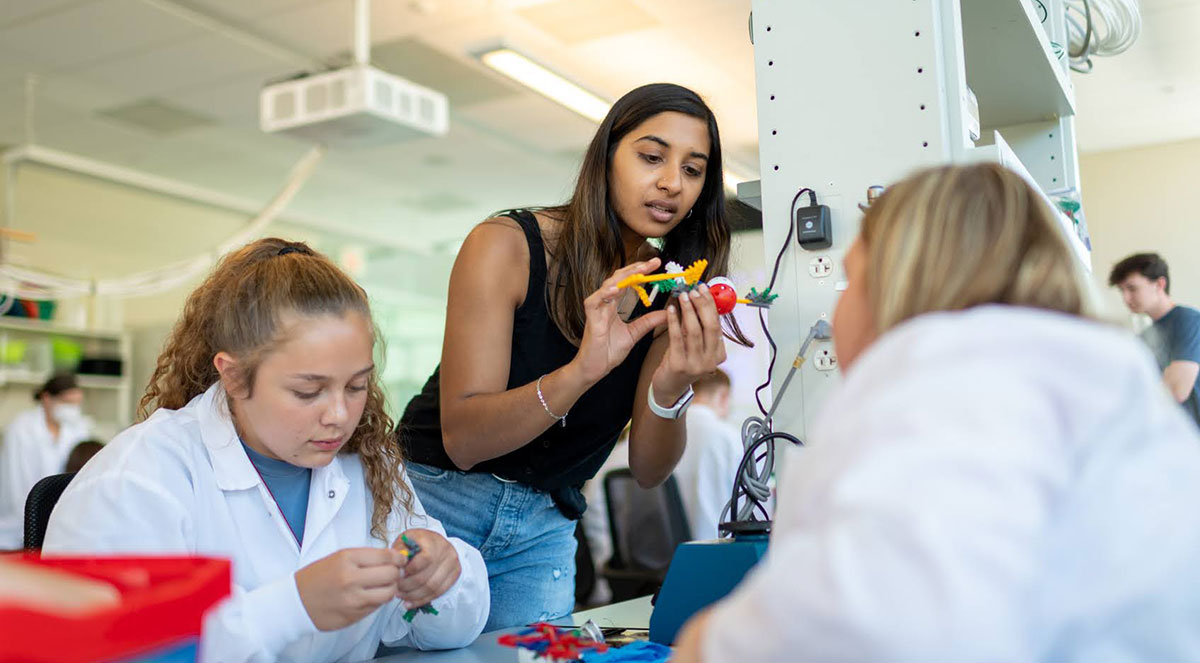
When Matt Peterson sensed a growing cultural divide over science and policy in Wisconsin several years ago, he reached out to the Morgridge Institute for Research in an effort to help bridge the troubling gap.
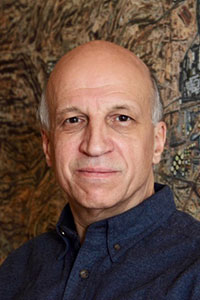
“It was at a time when I was increasingly concerned, and I was looking for ways to contribute to getting people together in constructive ways,” says Peterson, whose interest led him to support Morgridge’s Summer Science Camps.
The Summer Science Camp is a unique, immersive program for high school students and teachers in rural communities and from historically underrepresented groups in science. For four days, participants stay overnight in campus residence halls, explore hands-on activities in state-of-the-art facilities, learn from renowned scientists, and gain extraordinary research experience in a supportive community.
“When I heard about the camps, I thought, ‘What better way to help heal those divides than helping youth get together over science?’” he adds.
Peterson grew up in Williamstown, Mass., a small college town nestled in the Berkshires and went on to earn a bachelor’s degree in communications at Boston College. That’s where a work-study job triggered Peterson’s interest in computer technology.
“That job got me involved in computers and I learned computer programming and decided to pursue a career in technology,” Peterson says.
Intrigued by visual technologies, Peterson worked in diverse places around the world, developing computer-aided design tools for engineers and architects and tools that enable film and television producers to enhance the impact of their work.
Along the way, Peterson gained a deeper appreciation for the role science plays in society.
“I got to see science at work around the world, which I always found fascinating,” he says. “I had an opportunity, for example, when I was working with the World Health Organization in Switzerland to visit CERN — the European Organization for Nuclear Research — up close and personal. And I saw the assembly of the Pioneer Venus spacecraft out in Los Angeles. I was always intrigued.”
During his technology career, Peterson worked for larger firms, initially for a company called Computervision, for smaller early-stage ventures, and in his own consultancy.
“One of the things I like about science is that it gives me a bigger perspective on nature than at just the human scale.” Matt Peterson
After 30 years in Madison, Peterson is now retired and enjoys outdoor activities such as biking, camping, hiking, and winter sports. He also volunteers on the Technical Advisory Committee of the Madison Development Corporation’s Venture Debt Program.
“That work allows me to get a close-up look at the fascinating variety of emerging businesses driven by UW–Madison science,” he says.
Peterson participates in Morgridge’s Night in the Lab programs that brings science-curious donors and supporters closer to the institute’s work and the researchers that drive it forward.
“One of the things I like about science is that it gives me a bigger perspective on nature than at just the human scale. I can appreciate things on a very large scale, a very small scale. It expands my whole appreciation for nature,” Peterson says.
Each year, Peterson and his wife Pam — herself a former educator — also draw particular satisfaction from attending student presentations at the conclusion of the Summer Science Camps.
“It’s fascinating to hear how each one focuses on what they got out of the experience and what excited them,” Peterson says. “It’s also inspiring to talk with the instructors. They’re all very energetic, motivated people with so much knowledge to share.”