Kay Coates, Crandon High School
Kay Coates is a semi-retired life sciences instructor at Crandon High School in Crandon, Wisconsin. Before serving in Crandon, Coates was a life sciences instructor in the Rhinelander, Wisconsin school district. Coates has received an Excellence in Science Teaching award from the Wisconsin Society of Science Teachers, and has received numerous awards and fellowships recognizing her teaching service throughout her career.In northern Wisconsin, about 30 minutes from the Upper Peninsula of Michigan, sits the small town of Three Lakes. That quiet environment has defined most of my life. Born and raised in the northern Wisconsin region, I’ve spent decades teaching biology, anatomy, and medical sciences to high school students in small rural districts.
Today I’m about 75 percent retired, though retirement does still include teaching. I love the sciences and I’m not ready to give it up.
But loving science and having access to advanced scientific experiences are very different things in rural schools. That’s the gap that Morgridge Summer Science Camp helps bridge.
For many rural students, going away to university may be their first sustained exposure to a larger city. The experience can be overwhelming, and oftentimes unwelcoming.
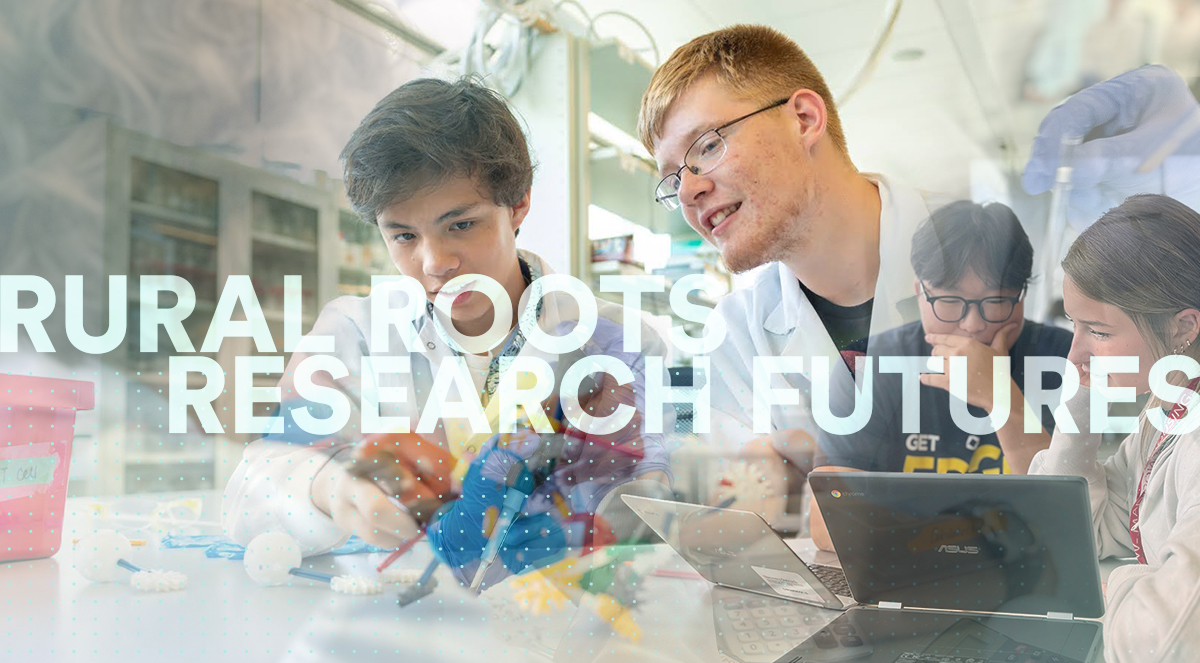
Students at camp shift their focus to scientific exploration. For many, the turning point comes when they first put on a lab coat. It changes how they see themselves. Suddenly they feel like real scientists.
“One experiment leaves a lasting impression: observing cultured heart cells that begin contracting under a microscope. When they see those cells beating, it’s unforgettable.”
Inside university labs, students encounter something rarely available: advanced scientific equipment and hands-on experimentation. In our schools, if we do these labs at all, they’re often virtual. Students move a mouse to simulate steps; they’re not touching equipment. At camp, they are.
At first, many are hesitant. They’re afraid they’ll break something. But by week’s end, confidence replaces caution. One experiment leaves a lasting impression: observing cultured heart cells that begin contracting under a microscope. When they see those cells beating, it’s unforgettable.
Another powerful aspect is meeting working scientists. For students from remote communities, professional researchers can seem distant. But at the camp, scientists move through the labs, talk with students and answer questions. The kids come back saying, ‘Miss Coates, we just met a real scientist.’ The realization that people behind discoveries are approachable can be transformational.
Toward week’s end, students present their work. They’re nervous at first, worrying about messing up in front of real scientists. But by presentation time, something remarkable tends to happen. They realize they understand the material and can explain their findings with ease.
If the drive to Madison is filled with wide-eyed curiosity, the drive back is something else entirely. The ride home is nonstop talking. Students replay experiences: labs conducted, scientists met, technology used. Many ask whether they can replicate experiments back at school. The camp tends to transform science from abstract to tangible.
Over the years, I’ve brought multiple groups. And looking back, I’ve noticed a pattern. The kids who went to camp are the ones who went into science fields. Former students now work as surgeons, physician assistants, pharmacists and technology professionals. It gave them hands-on experience we can’t provide in our schools.
Despite being mostly retired, I continue teaching because I enjoy the part that first drew me to the profession: working with students, conducting hands-on science and watching curiosity grow into confidence.
For students growing up where opportunity can feel distant, that excitement can alter life trajectories.
Rural Roots, Research Futures
For 20 years, the Morgridge Summer Science Camp has opened the doors of a world-class research university to high school students from rural Wisconsin. Through interviews with students, teachers, and experts, we examine what makes the experience transformative for participants and for science itself.