Marcy Heim, Executive Director, Wisconsin Rural Opportunities Foundation
Heim leads WROF, a Madison-based organization that empowers rural communities by providing educational scholarships and grants. Focusing on agriculture and healthcare, it invests in local students who commit to improving the economic health and quality of life in rural Wisconsin. Heim is also and international speaker and trainer on philanthropy, delivering keynote addresses and workshops across North America and beyond.When I talk about rural students arriving at a university for the first time, I’m not speaking as an outside observer. I was that kid.
I grew up in a tiny Wisconsin town of fewer than a thousand people. When I arrived at UW–Madison as a freshman, the contrast was overwhelming. My first chemistry class had 400 people. My graduating class had 60.
For students from small communities, the leap from a familiar rural environment to a large research university can feel like stepping into a completely different world. And yet, those moments of exposure can be life-changing. In fact, they changed mine.
Today I’m a nationally recognized nonprofit fundraising consultant and motivational speaker who spent more than two decades raising funds for the University of Wisconsin. But the path that led me there began with a simple belief instilled early. “You will go to UW–Madison,” my aunt told me when I was young. This expectation opened doors I never imagined.
“One of the most powerful misconceptions about higher education, especially in rural communities, is that success requires leaving home behind.”
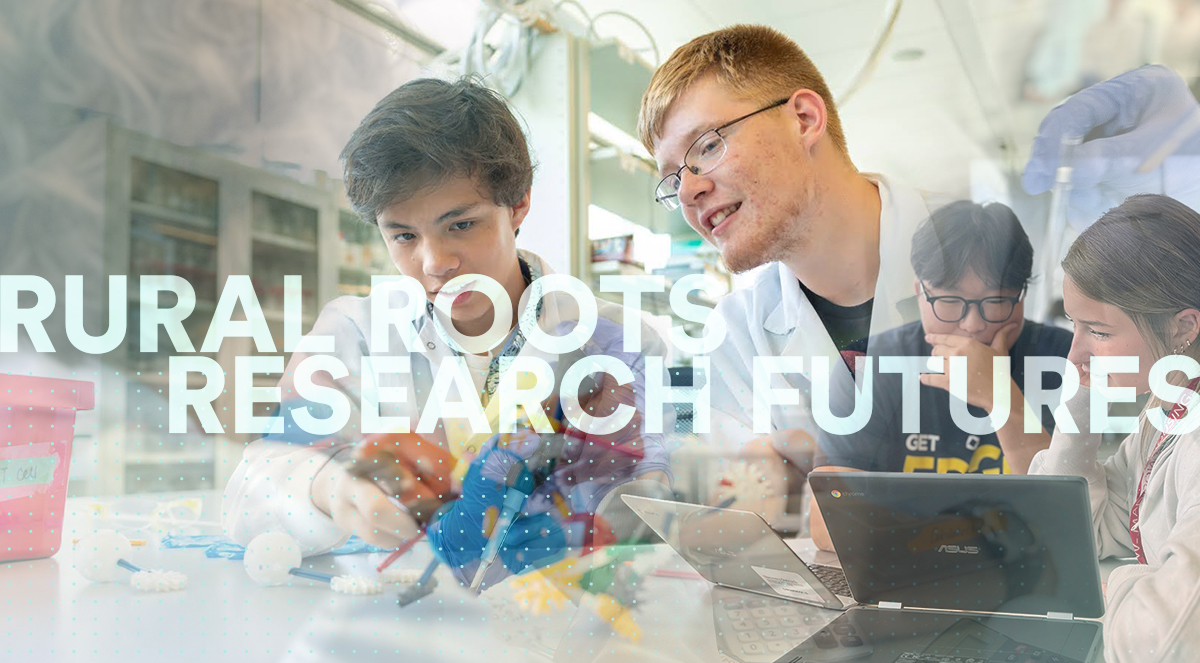
I see that same moment of possibility unfolding every year at Morgridge Summer Science Camp, a program designed to bring high school students and teachers from rural communities to campus for an experiential scientific exploration. The camp does something deceptively simple: it allows students to experience science and university life before they ever have to decide their futures.
For many participants, the experience removes the intimidation factor of a large university. You’re there with your teacher and classmates in a structured environment. It’s a much more digestible way to come to Madison for the first time. By the time students present their research at the closing poster session, it’s clear their confidence has improved significantly.
One of the most powerful misconceptions about higher education, especially in rural communities, is that success requires leaving home behind. I believe the opposite can be true. When students experience science like this early, they begin to see that science careers don’t take them away from their rural roots. Instead, those careers can strengthen the communities they came from. In many cases, it brings them right back to strengthening rural Wisconsin.
The biggest barrier to opportunity for rural students is awareness. Small schools may lack exposure to advanced scientific fields or the wide range of careers available. The science camp expands those horizons, exposing them to careers and pathways that may be brand new to them.
Some students may still choose farming, agricultural management, local businesses or another traditional rural career. In today’s world, even those paths increasingly require scientific understanding. Modern agriculture has become one of the most technologically sophisticated industries in the world.
While the program is designed for students, I believe the teachers who attend may benefit just as much. Science teachers from rural schools often work with limited laboratory equipment and fewer professional development opportunities. When teachers return to their classrooms, they bring new techniques, fresh enthusiasm and deeper scientific understanding back to their students. It broadens their horizons and can influence hundreds more students over their careers.
Programs like the science camp also challenge the cultural assumptions that often divide rural and urban communities. We all carry global beliefs about people. But when students from different backgrounds spend time working together, those stereotypes quickly dissolve. They realize we’re all just kids. We all have the same wants and hopes.
For me, the key word is access. These are kids who might never otherwise experience UW–Madison or advanced science. By bringing students to campus early before college decisions are made, the program allows them to imagine possibilities that once seemed unattainable.
Madison changed my life. Through programs like the summer science camp, it continues to change the lives of students who once thought such opportunities were beyond their reach.
Rural Roots, Research Futures
For 20 years, the Morgridge Summer Science Camp has opened the doors of a world-class research university to high school students from rural Wisconsin. Through interviews with students, teachers, and experts, we examine what makes the experience transformative for participants and for science itself.