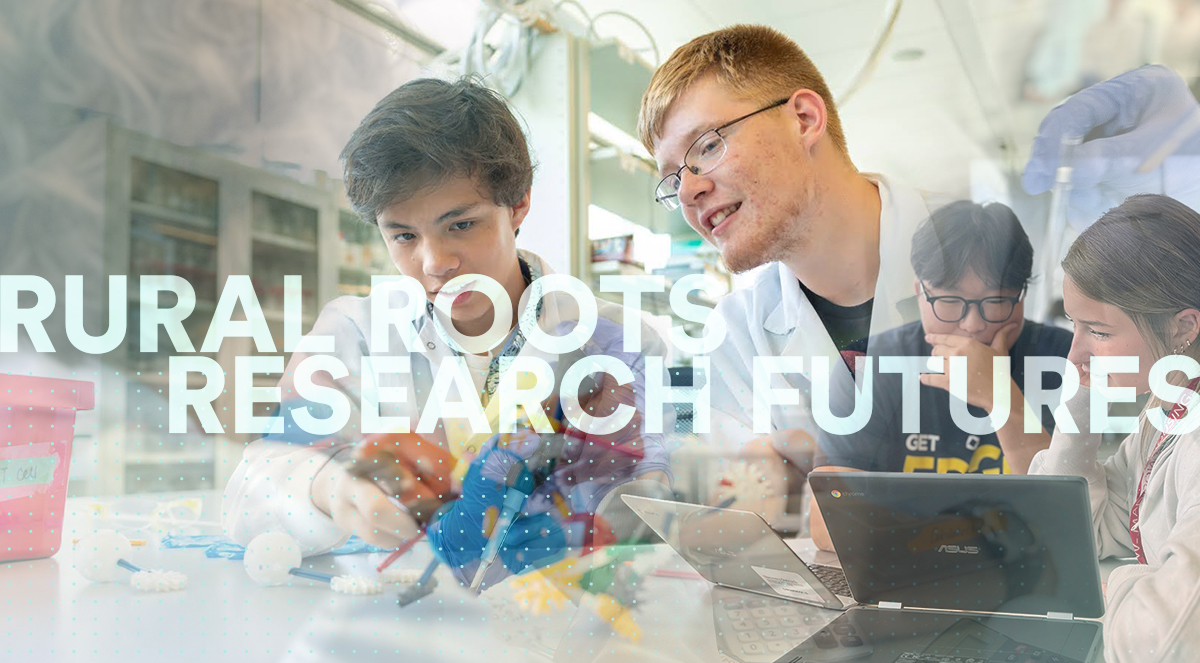
Cristina Camacho Wolfe, Darlington High School
Wolfe graduated in 2003 from Edgewood University majoring in both Biology and Broad Field Natural Science. She earned her funeral director/embalmer license after completing mortuary school at Milwaukee Area Technical College. After owning and managing her family’s funeral homes, Wolfe pursued her next passion by earning teaching credits from UW-Oshkosh. She currently teaches anatomy and physiology, physical science, integrated science, and physics and advises the science club, The Rosie Lab.I did not take the typical path into teaching. Before I stepped into a classroom, I spent years as a licensed funeral director and embalmer in Wisconsin. My days involved anatomy, chemistry, logistics, storytelling and guiding families through grief.
In many ways, the work prepared me perfectly for teaching. People would say, “I don’t know what to do. Teach me.” I realized teaching had always been part of what I did.
Today I teach science at Darlington High School, the same community in which I grew up. My true love has always been science. As a child I played with chemistry kits and set up imaginary classrooms. Now, I get to live out both passions simultaneously.
For me, science education begins with curiosity. I encourage students to ask questions constantly: why something happens, how it works, what might change. We don’t have to know everything, but we must want to answer these essential questions.
That being said, teaching curiosity today presents a unique challenge. Students arrive having seen remarkable amounts of science online. YouTube, TikTok, Instagram, and other platforms are filled with viral experiments and dramatic demonstrations.
“They see scientists saying, ‘We expected this result, but something else happened.’ They realize that’s normal — failure is a key part of discovery.”
The internet has raised expectations. While students see large-scale demonstrations, they haven’t experienced sensory details: the heat from an exothermic reaction, subtle color changes, delicate precision with laboratory equipment. The end result may be fascinating, but completely leaves out the observational process. Though we can learn a lot through screens, information is often left out.
Technology creates another complication: shorter attention spans. Students assume they can search for solutions later. They’re often more interested in results than the process itself. One of my teaching goals is to help students embrace that messy but essential process.
When my students spend a week at Morgridge Summer Science Camp, they visit working laboratories, interact with scientists and participate in real experiments. They see scientists saying, “We expected this result, but something else happened.” They realize that’s normal — failure is a key part of discovery.
The camp exposes students to the people behind scientific work. Researchers describe nonlinear career paths with unexpected turns. For my students, many from agricultural communities with clearly defined paths, this is liberating. They see that careers don’t have to follow the straight lines expected of them.
The experience is especially powerful for students unfamiliar with scientific spaces. Darlington’s population includes many emerging bilingual students whose home language is Spanish. Seeing bilingual scientists makes a powerful impression. When they see people who code-switch between languages, they realize they belong there too.
For many rural students, barriers to higher education are experiential. Many have never visited a large university campus or rode a city bus. Programs like the camp bridge that gap through first-hand experiences. They realize it’s not as scary as imagined.
Back in class, I’m something like a curator. With so much scientific information online, my task isn’t always delivering facts. I carefully select experiences that connect scientific concepts to students’ lives. In rural Wisconsin, that means connecting to agriculture, healthcare, environmental systems; industries students recognize. I want them to see that science is everywhere.
Ultimately, my message is simple: embrace curiosity and lean into things that make you a little nerdy. In science, those obsessions often become the starting point for discovery.
Rural Roots, Research Futures
For 20 years, the Morgridge Summer Science Camp has opened the doors of a world-class research university to high school students from rural Wisconsin. Through interviews with students, teachers, and experts, we examine what makes the experience transformative for participants and for science itself.