Matt Dunne, Founder and Executive Director, Center on Rural Innovation
Dunne launched CORI in 2017 to reverse the nation’s growing rural opportunity gap and create economic prosperity for small town residents across the country. Prior to founding CORI, he served 11 years in the Vermont House and Senate, enacting the state’s first broadband grants, brownfields revitalization funding, and downtown redevelopment program. He helped grow a Vermont-based software company to over 100 people and was Associate Director of the Rockefeller Center on Public Policy at Dartmouth College.For generations, America has told itself a story about innovation. It’s populated by urban skylines, elite universities, and technology campuses. In this version, innovation belongs to cities. Rural America is cast as something else: a place of nostalgia and decline.
I believe that story is not only incomplete. It’s dangerous.
I lead the Center on Rural Innovation and previously worked at Google. I’ve spent years thinking about how the country has underestimated one of its greatest assets: the ingenuity embedded within rural communities.
Any time our investments and policies leave rural places out of unlocking innovative ideas, we become less competitive.
Historically, many of America’s most transformative ideas didn’t emerge from urban corridors. They came from farms and small towns; from people who solved problems because nobody else was around. Many of the biggest innovation revolutions came from rural places. Farmers had to find solutions in the face of individual and community risk. When your brain started working that way, you discovered new ways of solving problems.
But over time, a different narrative took hold. As agriculture automated, innovation became associated with metropolitan concentration. A conventional wisdom hardened: if you wanted to build the future, you had to leave rural America behind.
“The most damaging barrier isn’t infrastructure. It’s when communities themselves begin to believe that innovation isn’t something people like them do.”
What seeped into the culture was the idea that if you were the bright kid, you left. You went to Madison or Chicago. And if you stayed home, you were settling.
The most damaging barrier isn’t infrastructure. It’s when communities themselves begin to believe that innovation isn’t something people like them do.
That belief matters because innovation isn’t merely technical expertise. It is better defined as confidence, curiosity and permission to imagine. For too long, rural students have been told that science and breakthrough thinking occur somewhere else.
I recall visiting rural schools and being introduced in ways that reinforced this. They’d say, “Here’s Matt. He worked at Google and he’s going to tell you how to get out of here.”
But that was never my message. What I wanted to tell them was: You can come home.
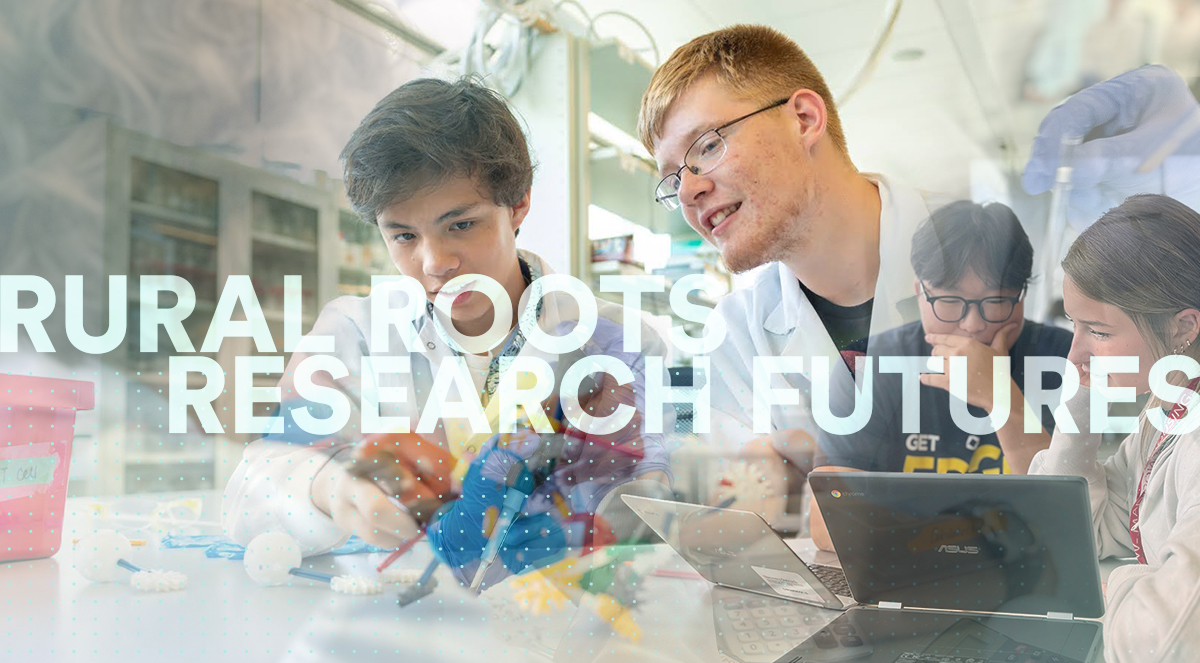
Exposure to science matters deeply. Commitment to this idea takes hold at the Morgridge Summer Science Camp, which brings rural Wisconsin students to Madison to work in a university research environment. This experience is essential — it allows students to see themselves differently.
But exposure alone isn’t enough. The challenge is ensuring students don’t internalize the idea that meaningful work can only happen elsewhere. The missing piece is helping people understand they don’t have to compromise being in the place they love to pursue ambitious work.
This has become urgent because the technological landscape is changing. COVID accelerated remote work. AI dramatically lowered technical barriers that once required an urban ecosystem. For the first time in decades, geography may matter differently. People can live where they want and still do extraordinary work.
Someone in rural Wisconsin now has access to tools that once existed only inside elite innovation hubs. The barriers are falling. You can have deep understanding of a real problem and use AI to help execute the technical side.
For years, innovation elevated a narrow archetype: the credentialed technologist from Stanford building venture-backed companies. Oftentimes, this approach ignores problem-solvers who understand industries at a lived level.
In eastern North Carolina, a sixth-generation dairy farmer developed computer vision technology for herd evaluation. In eastern Colorado, innovators with agricultural experience are developing crop-management tools that compete against major tech firms.
These founders aren’t disconnected technologists. They’re people embedded in the realities they’re improving. There’s tremendous innovation possible when technical barriers fall and domain expertise becomes more valuable.
I’m not anti-urban. Great cities matter enormously. But the country made a mistake when it allowed innovation to become monopolized by a handful of regions. We defined innovation too narrowly.
Innovation has always existed wherever people solve hard problems creatively. That includes a farmer redesigning equipment, a small business founder building AI systems, and a student discovering she belongs in a laboratory.
We need everyone at the table. If we leave rural communities out of science and innovation, we’re not just leaving them behind. We cannot afford to leave behind ideas and ingenuity the country desperately needs.

Rural Roots, Research Futures
For 20 years, the Morgridge Summer Science Camp has opened the doors of a world-class research university to high school students from rural Wisconsin. Through interviews with students, teachers, and experts, we examine what makes the experience transformative for participants and for science itself.