Marc Nager, Co-Founder and Managing Partner, Howdy Partners
Nager has spent the past two decades building and supporting entrepreneurial communities around the world. As co-founder and former CEO of Startup Weekend and UP Global, he helped launch programs that supported nearly one million entrepreneurs across five continents. Before joining Howdy Partners, Marc served as Chief Community Officer at Techstars and Managing Director of the Telluride Venture Accelerator.For decades, technological innovation in America centered on familiar geography: dense urban hubs with venture capital, research universities, fast-growing startups. Silicon Valley, Seattle and Boston may come to mind. Today that map is changing.
I’m an entrepreneur and venture investor focusing on early-stage companies in rural Colorado, and I believe the next chapter of American innovation may be written far beyond traditional tech corridors. The reason begins with education — especially science education.
We’re living through a profoundly important technological transition. Previous technology revolutions may be overshadowed by the growth of artificial intelligence. For the generation growing up today, the scale of implications is enormous. The playbook that guided previous generations is rapidly dissolving. It is not as simple to just graduate, enter a stable profession and build a predictable career anymore. Uncertainty for the next generation is incredibly high.
In that uncertain world, one institution remains society’s most reliable tool for shaping the future: education. And increasingly, that means science. Not everyone needs to become a software engineer, but the new economy requires fluency. I don’t see a world where you can be part of the innovation economy without understanding how technology works.
“Ultimately, the future of innovation won’t be confined to technological cities. It will emerge wherever curious minds meet meaningful problems.”
Fundamental understanding doesn’t mean building tools yourself. It means knowing how technologies interact, what they do well and where human judgment matters. This is where science education becomes the frontline for preparing the next generation. Rural communities cannot afford to be left behind.
For years, skeptics argued that innovation could only happen in large cities. But remote work has begun dismantling that assumption. Anyone can start a company from anywhere now. Advances in communication tools, cloud computing and distributed teams have dramatically lowered barriers to entrepreneurship. In other words, the barrier to entry is lower than ever.
But rural communities bring something even more valuable: perspective. Growing up rural exposes people to different problems, many of which urban entrepreneurs struggle to understand. Agriculture, logistics, energy, supply chains, land use, manufacturing and infrastructure all play central roles in rural economies. The combination of practical experience plus technological capability creates powerful opportunities for innovation.
One of our portfolio companies illustrates this perfectly. The founders grew up on a farm in rural Colorado before becoming interested in robotics and 3D printing. Today they’re building autonomous robotic systems that remove weeds for small and mid-sized farms. The technology is impressive, but what truly sets them apart is their ability to connect with the people driving our agriculture industry forward: farmers.
Many urban tech entrepreneurs attempt to build agricultural tools. But without firsthand farming experience, their products fail to connect with real customer needs. One agricultural investor told me: “I can find tech entrepreneurs anywhere. But I can’t teach them how to speak farmer.”
Another emerging pattern is what I call the “boomerang effect.” Many entrepreneurs in rural communities once left for education or careers elsewhere. But later they returned, bringing new skills and perspectives. Among the dozens of companies my firm has invested in, roughly half have some form of this dynamic. People leave, learn, then come back.
Perhaps the most important shift is cultural. For decades, rural communities have been framed as places struggling to keep up with technological progress. Now, that narrative is changing. The skills that kids develop growing up rural aren’t weaknesses, but assets.
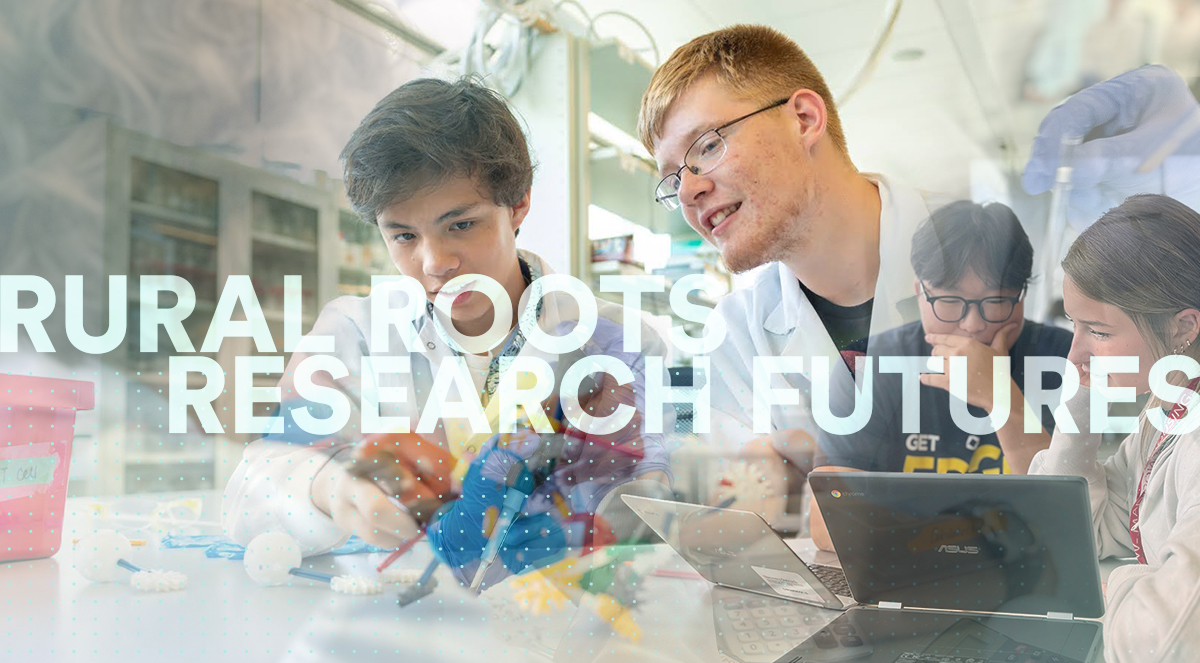
The Morgridge Summer Science Camp widens opportunities for rural students in our ever-changing world. Through an immersive research science experience, the camp sheds light on STEM opportunities that are already present in their everyday lives. Not only do the kids leave with more knowledge, they leave knowing they have a place in innovative fields.
When scientifically trained students return to rural communities as entrepreneurs, engineers and educators, they spark new economic activity. Science education acts as the multiplier for business formation, supply chain evolution and emergent opportunities. It doesn’t simply prepare individuals — it strengthens entire communities.
Ultimately, the future of innovation won’t be confined to technological cities. It will emerge wherever curious minds meet meaningful problems. Many of those problems exist far from traditional technology centers; especially out in our farms.
Rural Roots, Research Futures
For 20 years, the Morgridge Summer Science Camp has opened the doors of a world-class research university to high school students from rural Wisconsin. Through interviews with students, teachers, and experts, we examine what makes the experience transformative for participants and for science itself.