Patrick Thiele, Retired Executive and Philanthropist
Patrick Thiele was born in Boscobel, WI and attended The University of Wisconsin-Madison. He graduated with a BS in Finance in ’72 and MS in Finance in’75. During his 35 year career with financial organizations, he was an investment portfolio manager, a Chief Investment Officer, a Chief Financial Officer and, finally, President and CEO of PartnerRE LTD, a global reinsurance company headquartered in Bermuda. Since his retirement in 2010 he has served on the Board of the Wisconsin Foundation and Alumni Association and as a member of the Chancellor’s Advisory Council. He currently lives in Stillwater, MN and also has a home near Spring Green, WI.Beneath the American conversation about education, concerning funding, curriculum and standardized testing, lies a deeper cultural challenge: the widening divide between rural and urban America.
For me, a former global insurance CEO who grew up in rural Wisconsin, that divide is not an abstract political talking point. It’s something I’ve watched unfold across my lifetime. I think it’s getting wider.
My story reflects a different era. Raised in the small town of Boscobel, I graduated in a class of 65 students. When I headed to UW–Madison on a scholarship in 1968, the distance between rural life and the state’s flagship university didn’t feel insurmountable. In fact, seven students from my class attended Madison.
Today, that pathway is far less common. Very few even think about going to Madison now. It doesn’t feel like a place where they fit.
The problem isn’t just financial. Programs like Bucky’s Tuition Promise guarantee financial aid for many lower-income families. The resources are there, yet many students in small rural communities don’t believe those opportunities apply to them.
The deeper barrier is psychological and cultural. Students grow up surrounded by people whose lives and careers follow familiar local paths. Universities like Madison can feel like entirely different worlds. Once that belief that certain paths are “for other people” takes hold, it can be difficult to undo.
“The resources are there, yet many students in small rural communities don’t believe those opportunities apply to them.”
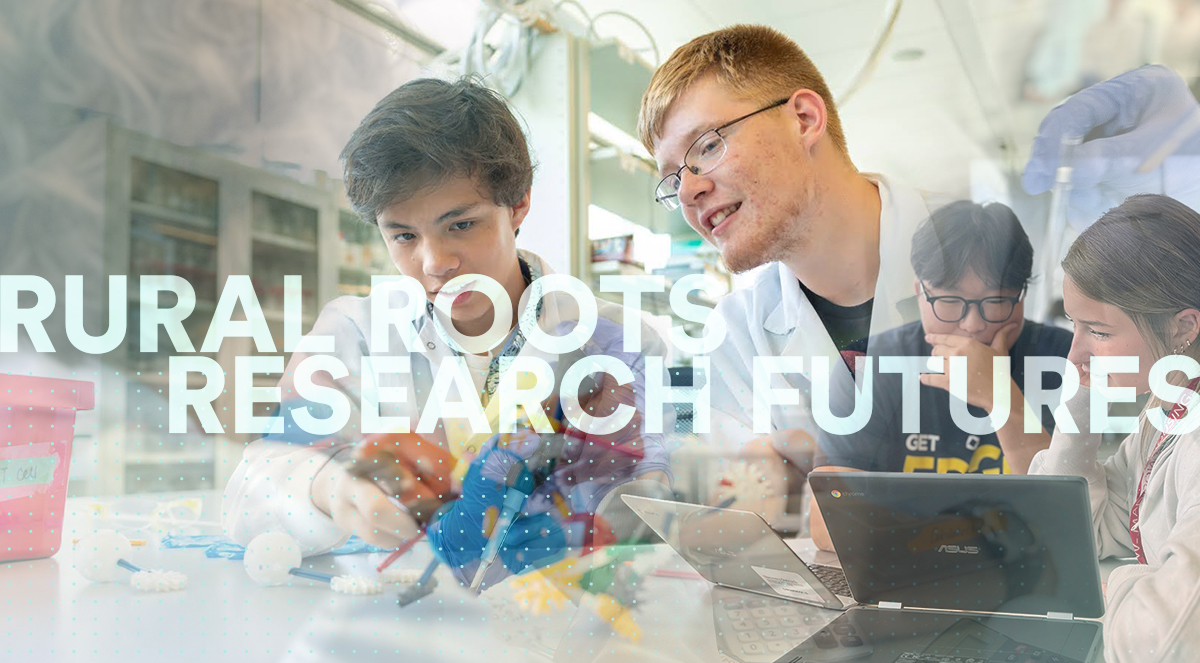
That’s where programs like the Morgridge Summer Science Camp can make a difference. At first glance, the camp seems simple: high school students spend time on a university campus, exploring research and participating in hands-on scientific activities. But the experience goes beyond experiments: it allows students to see themselves in that environment.
For teenagers from small rural schools, spending time at a large research university can be transformative. They meet scientists, graduate students and peers who share similar interests.
The camp provides a safe first encounter with a world that previously felt distant. Students can now see themselves there, regardless of their prior apprehensions.
Science is an unusually effective platform for this transformation. Part of its power lies in its process. Science encourages curiosity, experimentation and the ability to make sense of the world. That process can be deeply empowering. You take information, ask the right questions, come to a conclusion. And when it works, it feels really good.
Success in science doesn’t require perfection; failure is often part of the journey. If you’re right 51 percent of the time, that’s a great outcome. Embracing the process of testing ideas, learning from mistakes and building confidence through discovery is precisely what makes scientific learning environments powerful.
These students aren’t the only beneficiaries. Teachers are, too. Many educators return from these experiences energized by what they’ve seen and learned. They return to their work with more enthusiasm and new perspectives. That excitement has a cascading effect, and sometimes the impact comes down to just one student. If you can make a profound difference in one kid’s life, that’s enough.
Beyond helping individual students, I believe programs like the Morgridge Summer Science Camp strengthen science itself. Different backgrounds lead to different ways of thinking. We talk about diversity in terms of race, gender, and ethnicity — but let us include this dimension too. Rural students bring perspectives shaped by different communities, economies, and life experiences. When those perspectives enter scientific spaces, they broaden the conversation and enrich problem-solving.
Programs like this can’t solve all challenges that stand in the way of rural America. But they offer a powerful model for rebuilding connections. By creating opportunities for students to cross geographic and cultural boundaries, they remind young people that the world is larger and more accessible than it might appear.
Rural Roots, Research Futures
For 20 years, the Morgridge Summer Science Camp has opened the doors of a world-class research university to high school students from rural Wisconsin. Through interviews with students, teachers, and experts, we examine what makes the experience transformative for participants and for science itself.