Wesley Marner, Morgridge Engagement, Education and Equity Director
Marner provides leadership to a team of professionals who produce informal science education programming for K-12 students throughout Wisconsin and who build professional and career development programming for early-career scientists. The team operates summer camps, field trips, afterschool activities, and other programs that serve thousands of young people each year. Marner works with researchers at Morgridge and UW–Madison to translate their science into programs that spark STEM interest in youth.After more than a decade helping lead the Morgridge Summer Science Camp, I’ve learned something that might surprise people: the most impactful part isn’t the science content.
Students don’t remember exact details of metabolism or technical steps of experiments. They remember conversations with scientists, feeling welcomed and seeing themselves in a space they once found intimidating.
That realization has reshaped how I think about this work.
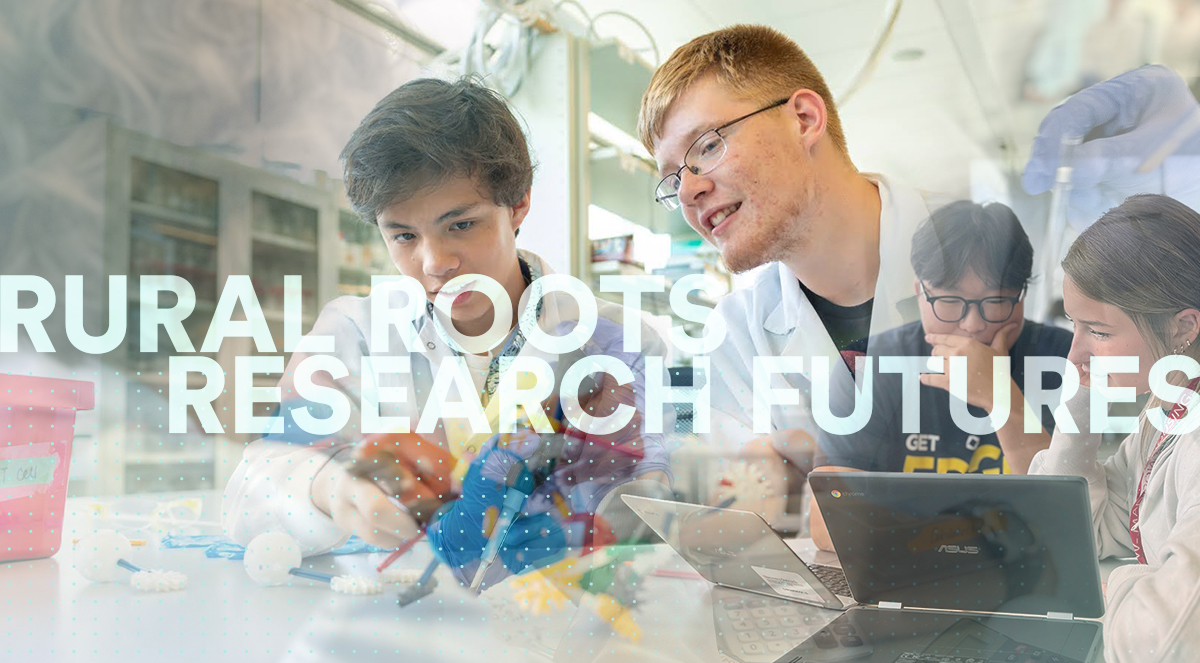
The camp brings high school students, many of whom are from smaller rural communities, into the research labs and campus life at UW–Madison and the Morgridge Institute. For one week, these youth and their teachers don’t just observe science — they live it. They stay in dorms, interact with researchers and step into an environment that at first can feel unfamiliar and intimidating.
I know that feeling well. Long before I helped lead the program, I was one of those students standing on the outside. Growing up in rural Appalachia, I wasn’t even aware of the STEM and research world that was available to me. An informal science experience much like the one I now run changed my trajectory. It opened my eyes to possibilities.
That moment of recognition is what we try to replicate in the Morgridge Summer Science Camp.
“Growing up in rural Appalachia, I wasn’t even aware of the STEM and research world that was available to me. An informal science experience much like the one I now run changed my trajectory.”
Central to that recognition is what educators call “STEM identity,” a shift in a student’s mindset from learning about science to imagining themselves as part of it. That shift rarely happens through textbooks. It emerges through conversations, a shared experiment, or a realization that the people doing this work are human and relatable.
Science intersects with nearly every aspect of modern life. Even for those who choose different careers, the ability to engage with scientific ideas, and to engage the people behind them, remains essential.
That point carries particular weight when public trust in science is complicated. Surveys suggest people trust scientific knowledge, yet there is skepticism toward scientists themselves, a sentiment shaped by perceptions of distance or elitism. This program attempts to close that gap.
Now, after twenty years, the question is no longer whether the model works, but how it can grow.
One path is replication. The program’s track record offers a blueprint that other institutions could adopt, particularly institutions with ties to rural communities. By sharing what we’ve learned, we can extend the model beyond a single campus.
Another direction involves reversing the flow. Rather than bringing students exclusively to Madison, I envision expanding reach into communities themselves. Scientists traveling outward, engaging students where they live, building connections that aren’t limited by geography.
It’s an extension of our core philosophy: access should not depend solely on a student’s ability to step into a new environment. Sometimes, it requires meeting them where they already are.
The role of the Morgridge Institute and UW–Madison remains central. The institute provides the structure while the university contributes a vast network of faculty and resources. Together, they create an environment that allows students to experience science not as an abstract concept, but as a living practice.
In the end, impact isn’t measured solely in the number of students who pursue scientific careers. It’s reflected in something less tangible: a shift in how young people see themselves.
For a student who arrives uncertain, the experience can open a door.
Once a student begins to think, “I belong here,” the trajectory of a life can begin to change.
Rural Roots, Research Futures
For 20 years, the Morgridge Summer Science Camp has opened the doors of a world-class research university to high school students from rural Wisconsin. Through interviews with students, teachers, and experts, we examine what makes the experience transformative for participants and for science itself.